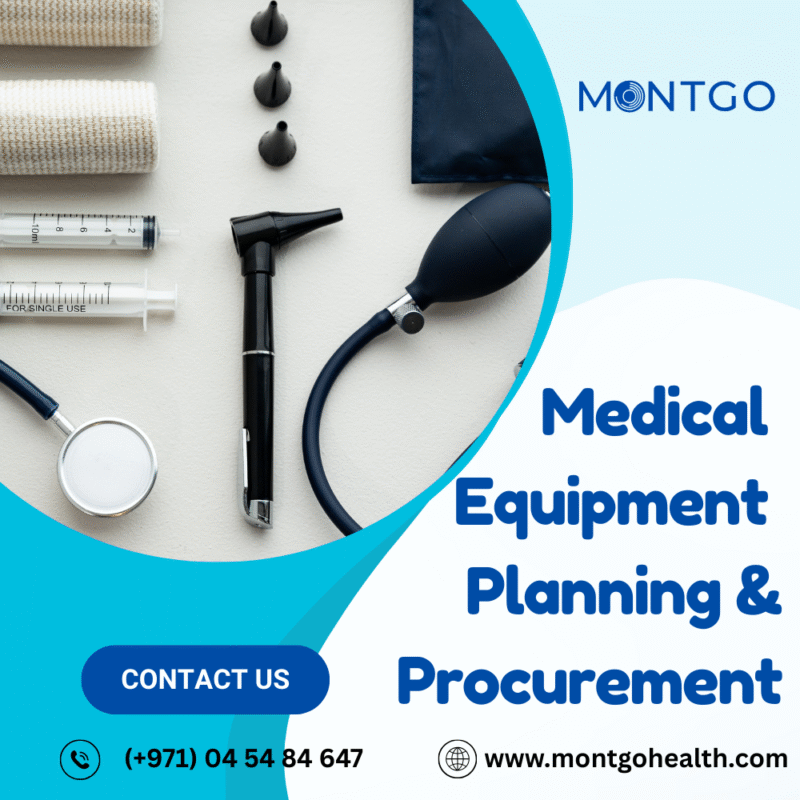
In today’s rapidly advancing healthcare environment, technology is central to providing timely, effective, and high-quality patient care. From complex imaging machines to everyday monitoring tools, medical equipment forms the foundation of clinical services. However, success isn’t just about acquiring equipment—it’s about strategic planning, thoughtful procurement, and seamless integration. This is where Medical Equipment Planning and Procurement becomes a critical, strategic function.
This blog delves into the significance of medical equipment planning and procurement in healthcare development, outlining essential strategies, stages, and best practices that lead to operational efficiency and improved patient outcomes.
Understanding Medical Equipment Planning
Medical Equipment Planning is a structured process that involves identifying, selecting, budgeting for, and incorporating medical equipment into healthcare facilities. Whether building a new hospital, renovating a wing, or launching a specialty unit, this process takes into account clinical needs, spatial design, technological compatibility, regulations, and workflows.
Ideally, planning begins during the architectural design phase to ensure each piece of equipment fits both physically and operationally within the broader healthcare system.
Ready to Start Your Medical Career in UAE?
Have questions about your medical license or facility setup? Contact us today and let’s make your journey seamless!
Core Goals of Medical Equipment Planning:
- Select appropriate equipment tailored to clinical functions
- Maximize space efficiency and workflow
- Align equipment with budgets and infrastructure capabilities
- Facilitate long-term maintenance, scalability, and upgrades
Why Equipment Planning Is Essential
Medical equipment represents a significant investment in both capital and functionality. When planned correctly, it enhances patient care, improves efficiency, and lowers long-term costs. Poor planning, however, can lead to:
- Incompatible or redundant equipment
- Budget overspending
- Compliance issues
- Delays in facility operations
- Safety concerns for patients and staff
Strategic planning aligns equipment choices with institutional goals, user needs, and technological trends.
Step-by-Step: The Equipment Planning Lifecycle
- Needs Analysis Assess clinical service lines, expected patient load, and clinician input. Inventory any reusable assets.
- Detailed Equipment Listing (Room-by-Room) Break down every area to the room level and create a comprehensive list of all equipment required.
- Cost Estimation Develop budget forecasts for procurement, installation, training, and ongoing maintenance.
- Space and Infrastructure Alignment Coordinate with design teams to ensure rooms have appropriate utilities and spatial allowances.
- Vendor Selection and Standardization Identify preferred suppliers, evaluate service agreements, and aim for brand uniformity where possible.
- Procurement Planning Establish a clear acquisition plan that accounts for bidding, delivery schedules, and risk mitigation.
- Delivery, Setup, and Testing Manage logistics for delivery, oversee installation, and verify functional and regulatory compliance.
- Training and Commissioning Conduct hands-on training for staff and provide documentation, certification, and final walkthroughs.
Defining Medical Equipment Procurement
Procurement refers to the logistical and contractual process of acquiring medical devices and technologies. While planning ensures the right equipment is identified, procurement ensures it’s sourced, delivered, and implemented effectively.
Key elements of procurement include:
- Tender and bidding processes (especially for public health projects)
- Vendor due diligence
- Evaluating total cost of ownership
- Managing legal, tax, and importation factors
- Implementing eco-friendly procurement practices
Equipment Categories in Healthcare Projects
- Diagnostic: MRI, CT, ultrasound, lab equipment
- Therapeutic: Infusion pumps, surgical lasers, dialysis units
- Monitoring: Vital signs monitors, telemetry systems
- Life Support: Ventilators, anesthesia machines
- Facility Infrastructure: OR tables, hospital beds, HVAC systems
- IT Systems: EMRs, nurse call systems, PACS
Common Procurement and Planning Challenges
- Long Lead Times: Extended manufacturing cycles can delay projects.
- Budget Overruns: Costs can spiral due to late changes or unplanned needs.
- Regulatory Compliance: Ensuring equipment meets local and global standards.
- Service and Maintenance Gaps: Failure to plan for support can disrupt operations.
- Integration Issues: Equipment must interface smoothly with IT systems and infrastructure.
Best Practices for Success
- Engage all stakeholders early, including clinical, technical, and IT teams
- Assign a dedicated equipment planner or consultant
- Standardize equipment models where feasible
- Evaluate lifecycle costs, not just purchase price
- Build in time and cost buffers for contingencies
- Maintain thorough documentation throughout the project
Ready to Start Your Medical Career in UAE?
Have questions about your medical license or facility setup? Contact us today and let’s make your journey seamless!
Technology’s Role in Planning and Procurement
Digital tools and AI are revolutionizing equipment planning and procurement. Benefits include:
- Automated room-by-room equipment lists
- Predictive analytics for timelines and costs
- 3D spatial modeling for equipment layout
- Real-time budget tracking
- Compliance and regulatory flagging
Case Example: A Diagnostic Wing Done Right
A mid-size hospital developing an outpatient diagnostic center used structured planning and smart procurement strategies to:
- Reuse 18% of existing equipment
- Standardize 65% of devices with one vendor
- Complete procurement 3 months early
- Save over $500,000 in total costs
The result: A modern, patient-ready diagnostic center delivered on time and within budget.
Montgo Health: Your Technology Partner in Smart Equipment Integration
Montgo Health empowers healthcare organizations with digital solutions that complement medical equipment through integrated workflows and real-time data access. From EHRs and patient monitoring to equipment analytics and remote diagnostics, Montgo Health transforms devices into intelligent systems.
When combined with strategic equipment planning, Montgo Health solutions ensure healthcare facilities are ready for tomorrow’s demands today.
Medical equipment planning and procurement go beyond logistical tasks—they are foundational to building resilient, efficient, and patient-centered healthcare systems. Through clear strategies, stakeholder collaboration, and technology integration, healthcare providers can build facilities that deliver quality care and adapt to future needs.
Start your next healthcare project with a blueprint that includes not just walls and wires, but a future-proof medical equipment strategy.
Frequently Asked Questions
Q. What is a medical equipment management plan (MEMP)?
A. MEMP is a structured policy document guiding the safe selection, maintenance, and operation of medical devices, enhancing care delivery and minimizing risks.
Q. What does the procurement process involve?
A. It includes identifying needs, setting specifications, budgeting, supplier selection, purchasing, delivery, installation, and establishing support contracts.
Q. What does procurement mean in healthcare?
A. It refers to acquiring equipment, consumables, or services essential to clinical operations while ensuring regulatory compliance and value.
Q. What is equipment planning?
A. Equipment planning involves forecasting and specifying necessary tools for a project, ensuring they fit within spatial, functional, and budgetary parameters.
Q. What is an equipment plan?
A. It is a comprehensive document listing required devices, quantities, placements, budgets, and specifications to guide procurement and implementation.
Q. What does equipment management entail?
A. It covers the full lifecycle of medical devices, including acquisition, maintenance, calibration, and eventual decommissioning, ensuring safety and functionality.