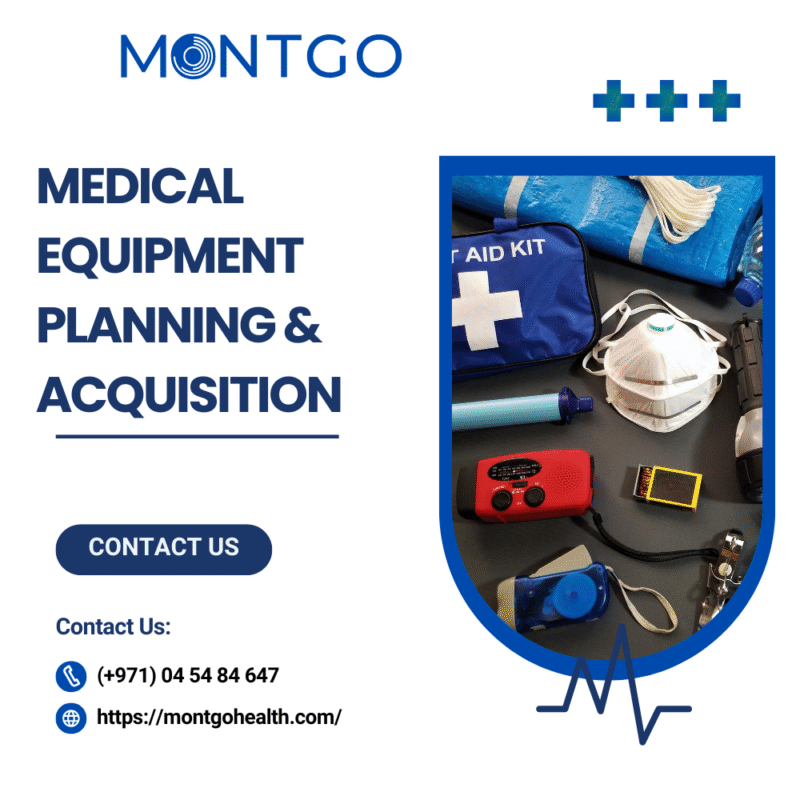
Healthcare delivery relies not only on skilled professionals and advanced facilities but also on the effective planning and acquisition of medical equipment. Medical Equipment Planning (MEP) is a strategic, multidisciplinary process that ensures healthcare organizations are equipped to meet patient and provider needs efficiently and safely.
What is Medical Equipment Planning?
MEP involves the systematic identification, selection, procurement, and deployment of medical equipment within healthcare facilities. It requires collaboration among clinical teams, biomedical engineers, architects, procurement experts, IT specialists, and facility managers to align technology with care delivery needs. The objective is to have the right equipment in the right place at the right time, all within budget.
Importance of Medical Equipment Planning
Effective MEP is crucial for:
-
Patient Safety and Outcomes: Ensuring up-to-date and functional equipment enhances diagnostic and treatment accuracy.
-
Staff Productivity: Well-integrated, user-friendly equipment improves workflow efficiency and reduces burnout.
-
Cost-Efficiency: Prevents over-purchasing, duplication, and underutilization of assets.
-
Regulatory Compliance: Ensures equipment meets local and international healthcare standards.
-
Future-Readiness: Aligns procurement with technological trends and expansion plans.
Ready to Start Your Medical Career in UAE?
Have questions about your medical license or facility setup? Contact us today and let’s make your journey seamless!
Stages of Medical Equipment Planning & Acquisition
-
Clinical Needs Assessment: Collaborate with clinical leaders to determine equipment requirements based on procedures, patient volume, and departmental expansions.
-
Space and Infrastructure Coordination: Ensure equipment aligns with facility layout, structural capabilities, and utility requirements. Early collaboration with architects and engineers is essential.
-
Budgeting and Cost Estimation: Assess lifecycle costs, prioritize essential equipment, and identify funding sources to avoid cost overruns and procurement delays.
-
Vendor Selection and Procurement: Evaluate vendors based on reliability, service offerings, warranty, compliance with specifications, and interoperability with existing systems.
-
Installation and Commissioning: Coordinate delivery, installation, calibration, and compliance checks to prevent delays in facility operations.
-
Training and Change Management: Provide initial and ongoing training, vendor-led workshops, and simulation-based learning to ensure effective equipment utilization.
-
Maintenance and Lifecycle Management: Implement preventive maintenance schedules, track repairs and parts, conduct equipment audits, and plan for replacements using smart asset management systems.
Types of Medical Equipment Considered in Planning
-
Diagnostic Equipment: X-rays, MRI, CT, ultrasound, ECG machines.
-
Therapeutic Equipment: Infusion pumps, dialysis machines, ventilators.
-
Surgical Equipment: Operating tables, lights, electrosurgical units, robots.
-
Patient Monitoring: Vital signs monitors, telemetry systems.
-
Durable Medical Equipment (DME): Hospital beds, wheelchairs, stretchers.
-
Laboratory Equipment: Centrifuges, analyzers, microscopes.
-
IT & Digital Health: PACS, RIS, HIS, EHR devices, telehealth systems.
Emerging Trends in Equipment Planning & Acquisition
-
Digital Transformation: Integration of software-driven and connected equipment necessitates considerations for cybersecurity, interoperability, and cloud-based data management.
-
Sustainability and Green Procurement: Adoption of eco-friendly equipment that consumes less energy and uses recyclable materials, aligning with environmental sustainability goals.
-
Leasing and Pay-Per-Use Models: Facilities are increasingly leasing equipment or adopting pay-per-use models to reduce capital expenditures and access the latest technology.
-
Remote Monitoring and AI Integration: Smart equipment with AI capabilities can predict equipment failure, suggest clinical actions, and automate routine tasks, enhancing patient care and equipment management.
Common Challenges in Medical Equipment Planning
-
Budget Overruns: Inaccurate cost estimates or unforeseen installation costs can strain financial resources.
-
Stakeholder Misalignment: Differing priorities among clinicians, IT, and procurement teams can hinder cohesive planning.
-
Regulatory Barriers: Navigating import/export restrictions, certifications, and customs issues can delay equipment acquisition.
-
Technology Obsolescence: Rapid technological advancements can render equipment outdated quickly, necessitating agile planning.
Ready to Start Your Medical Career in UAE?
Have questions about your medical license or facility setup? Contact us today and let’s make your journey seamless!
Best Practices for Successful Equipment Planning
-
Early Integration: Initiate planning during the architectural design phase to ensure seamless incorporation of equipment needs.
-
Stakeholder Engagement: Involve end-users and support staff from the outset to align equipment choices with operational workflows.
-
Utilize Equipment Planners: Engage specialized consultants to ensure compliance, performance, and cost control.
-
Leverage Technology: Employ planning software, Building Information Modeling (BIM), and simulation tools for accurate equipment placement and integration.
-
Long-Term Thinking: Consider scalability, upgrades, and total cost of ownership in planning decisions.
-
Facility Design Integration: Align equipment planning with patient flow, infection control, and safety standards to optimize facility performance.
The Future of Equipment Planning
As healthcare evolves towards personalized care, AI-driven diagnostics, and decentralized delivery models, equipment planning will become a dynamic, data-driven discipline. It will require continuous adaptation to medical advancements and patient needs, ensuring that healthcare providers can deliver high-quality care efficiently and sustainably.
Equipment as an Enabler of Care
Medical equipment serves as the backbone of healthcare delivery, enabling accurate diagnoses, effective treatments, and improved patient outcomes. Strategic equipment planning and acquisition empower healthcare systems to operate more efficiently, innovate confidently, and plan sustainably for the future.
About Montgo Health
At Montgo Health, we specialize in comprehensive Medical Equipment Planning & Acquisition tailored to your facility’s vision, workflow, and future goals. Whether you’re building a new hospital, renovating an existing clinic, or upgrading critical care units, we ensure your equipment strategy aligns with your commitment to clinical excellence.
Montgo Health — Empowering care through smarter planning.
Frequently Asked Questions
Q. How are medical devices regulated in the UAE?
A. Medical devices in the UAE are regulated by the Ministry of Health and Prevention (MOHAP). All devices must be registered and classified by risk. Importers need a valid medical device establishment license.
Q. How to start a medical equipment trading company in Dubai?
A. Register your business with the Department of Economic Development (DED) or a Free Zone, choose a trading activity, and obtain MOHAP approvals. A trade license and local office are also required. Customs registration is needed for importing.
Q. How much does a trade license cost in UAE?
A. Trade license costs range from AED 10,000 to AED 25,000 (Mainland) or more in Free Zones. Additional fees include office rent and external approvals. Costs vary by business activity and location.
Q. How much does it cost to register a medical device in UAE?
A. Medical device registration with MOHAP typically costs AED 1,000–2,000 per device. Additional costs apply for evaluation or document translation. Prices vary based on classification and device type.
Q. How can I open a medical store in UAE?
A. You need a pharmacy license from the Health Authority (DHA, MOHAP, or DOH), a trade license, and a licensed pharmacist. The store must meet specific size and layout standards. Approval takes several weeks.
Q. How do I get my medical license in UAE?
A. Apply through the health authority in your emirate (DHA, DOH, MOHAP), pass exams, and verify your qualifications. You need a degree, experience, and a dataflow report. Once approved, you get a professional license.